What was a trilobite?
A sea-living arthropod with a three-part plan, jointed legs and armour on top.
How this site works. Every fact is in our own words and linked to its source, beside it. Where good sources disagree, we show each version in a “Sources differ” box.
An arthropod of the sea
Trilobites were sea animals and arthropods, the group that includes insects, spiders and crustaceans. NHM
Geologists know they lived in the sea from the rocks they are found in and the other fossils found with them. BGS
Britannica describes them as extinct fossil arthropods, easily recognised by their three-lobed, three-part form, and only ever living in the sea. Britannica
Everything we know about trilobites comes from fossils. NHM
The museum’s trilobite expert Richard Fortey says there were trilobites as spiky as porcupines and as smooth as boiled eggs, bigger than lobsters and smaller than gnats. NHM
Despite all that variety, they kept to one very particular body plan. NHM
After the Cambrian explosion they became one of the main parts of ocean life; the Early Palaeozoic has been called ‘the age of trilobites’. NHM
Three lobes
The word trilobite means ‘three lobes’. NHM
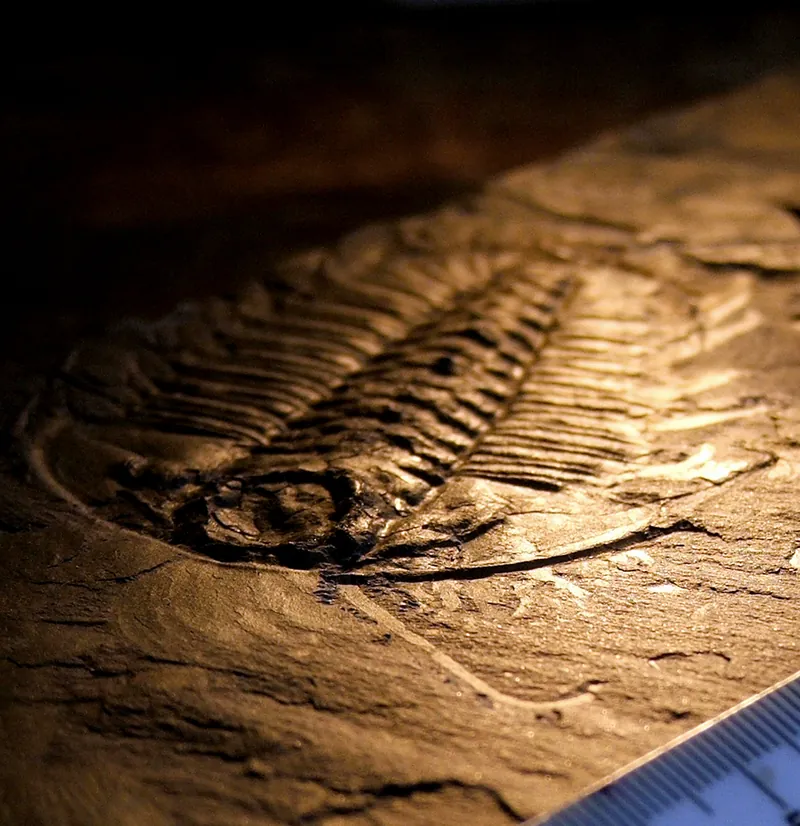
Every trilobite had a head called the cephalon, a tail called the pygidium and a thorax in between. NHM
They were also split into three from side to side: a central axis with a lobe on each side, called the pleurae. NHM
What does “three lobes” refer to? Sources differ
The head
The middle of the head is the glabella, with fixed cheeks and free cheeks on each side. NHM
Many had spiky back corners to the head, called genal spines. NHM
Armour on top, legs below
They were armoured on top; fossils of their soft undersides are much rarer. NHM
Usually only the back of the exoskeleton became a fossil; the underside may have been covered by soft material that could not fossilise. BGS
Britannica says their exoskeleton was made of chitinous material. Britannica
In life they had antennae on the head, used to sense the world chemically. NHM
Soft parts are known for only a few species, from special deposits called Lagerstätten. BGS
The NHM notes that, unlike the exoskeleton, their legs were not strengthened with calcium carbonate, so they rarely fossilised well. NHM news
Try it: roll up a trilobite
Pick a step to see what happened.
All three steps are shown below.
Step 1: Walking
They walked on jointed legs: three pairs under the head and one pair under each segment of the thorax and tail. NHM
Each leg had two branches: a lower one for walking and an upper one with many fine filaments, perhaps for breathing. BGS
Step 2: Danger
The segments of the head and tail were fused, but those of the thorax were not. BGS
The thorax segments could bend, so a trilobite could curl into a ball, a bit like a woodlouse. NHM
Step 3: A tight ball
Rolling up protected its softer underside when danger came. BGS
Moulting and growing up
To grow, a trilobite had to shed its exoskeleton. Britannica
A facial suture across the cheeks helped the animal moult. BGS
A cast-off exoskeleton often fell to pieces, which is why trilobite fossils are usually found as fragments. BGS
Shed exoskeletons, or parts of them, are relatively common fossils. Britannica
Trilobites began life as tiny larvae called protaspides and moulted regularly as they grew. NHM
Young trilobites added thorax segments one at a time until they had the adult number, then simply grew larger. NHM
Fortey thinks the earliest growth stages of many trilobites were part of the plankton. NHM
Next: crystal eyes →