A trilobite on a coat of arms
How Calymene blumenbachii became the symbol of a Black Country town.
How this site works. Every fact is in our own words and linked to its source, beside it. Where good sources disagree, we show each version in a “Sources differ” box.
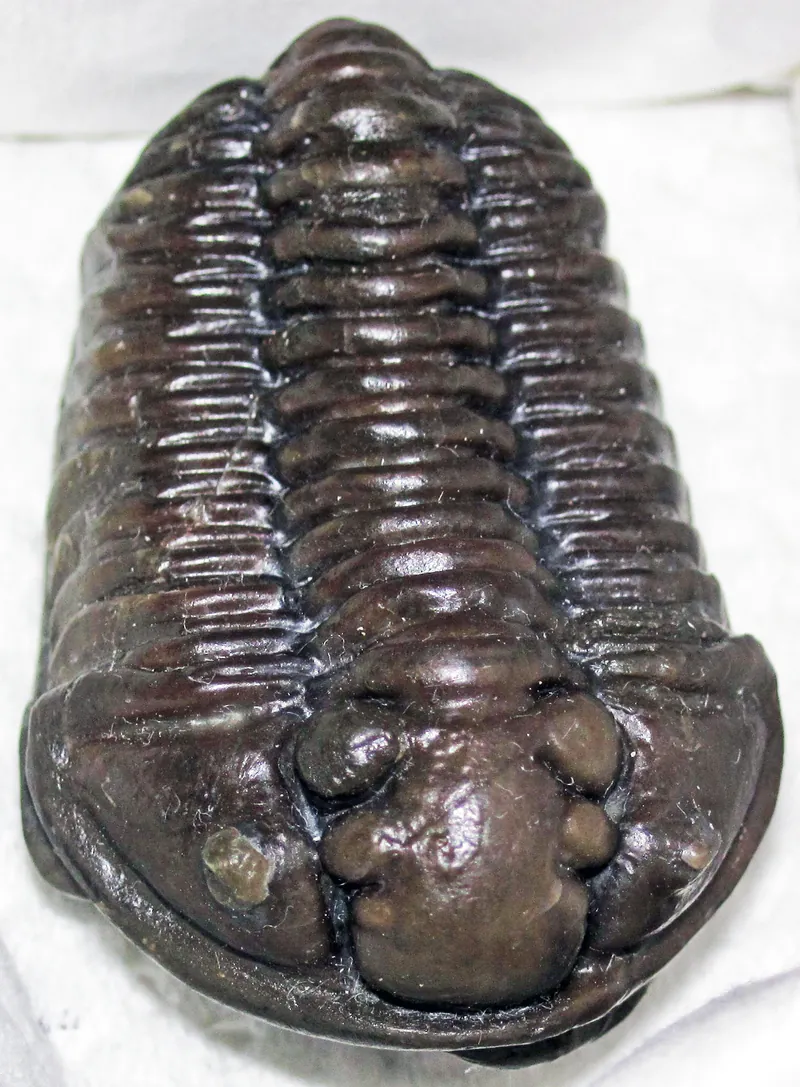
The Dudley Bug
Local miners called it the ‘Dudley locust’, and it ended up on the Dudley County Borough Council coat of arms. NHM
Calymene blumenbachii was first found in the 18th century at Wren’s Nest in Dudley. NHM
The BGS lists three nicknames: Dudley Locust, Dudley Bug and Dudley Insect. BGS
Calymene sits at the centre of Dudley’s coat of arms. BGS
Dudley Council says it was so common in 19th-century quarries that it became a symbol of the limestone mining industry. Dudley Council, geology
On the crest it sits between an anchor for the sea and a miner’s Davy lamp. Scientific American blog
The Scientific American blog says the design was adopted in the 1950s, though trilobites are even in the walls of 11th-century Dudley Castle. Scientific American blog
The real fossils are not red; they came out of yellowish rock. Scientific American blog
By the mid-19th century people wore Dudley trilobites as jewellery. NHM
Wren’s Nest
Trilobites are probably the most famous fossils at Wren’s Nest. Dudley Council, geology
Another common Wren’s Nest trilobite is Dalmanites. Dudley Council, geology
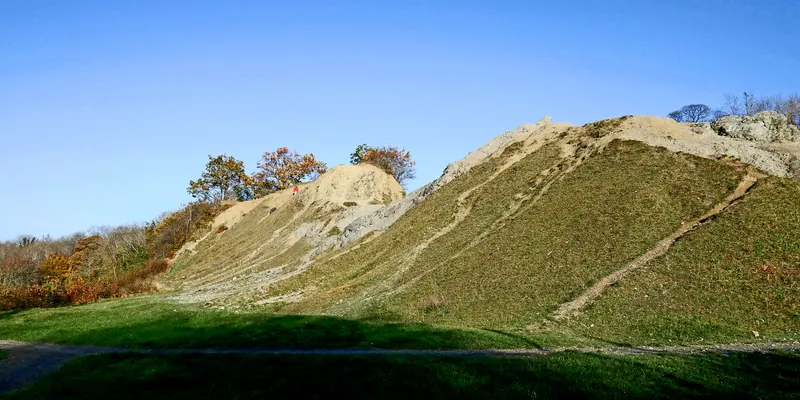
Wren’s Nest became England’s first national nature reserve set up for its geology, in 1956. Black Country Geopark
The area was quarried and mined for limestone until 1925. Dudley Council, geology
Sir Roderick Murchison’s 1839 book The Silurian System drew heavily on Dudley: about 65% of the Wenlock fossils it illustrated came from there. Dudley Council, geology
Over 400 million years ago, Dudley was covered by coral reefs and tropical seas. Dudley Council
Over 700 types of fossil are found there: 186 were first described there and 86 are found nowhere else on Earth. Black Country Geopark
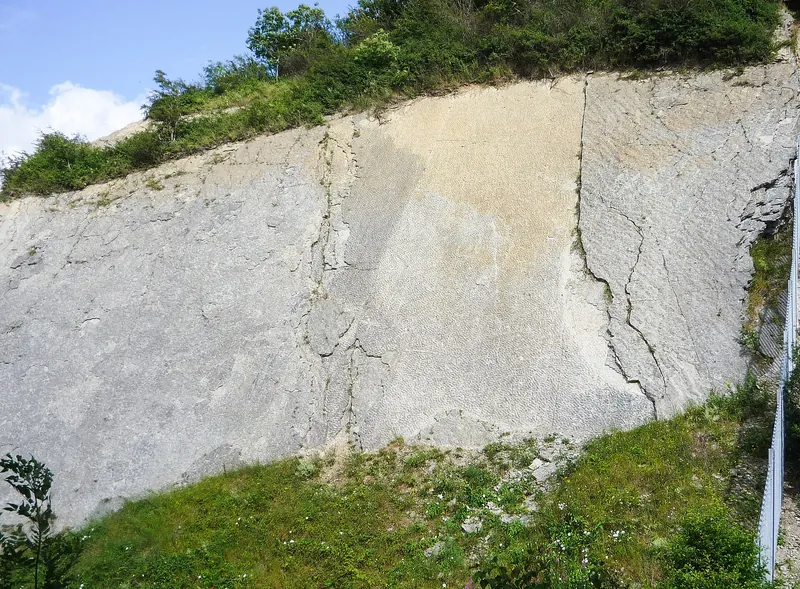
The Ripple Beds are ripple marks from the floor of the Silurian sea. Dudley Council, geology
How old are the rocks? Sources differ
- The Geopark dates its rocks to between 427.7 and 429 million years old. Black Country Geopark
- Dudley Council’s geology page says approximately 420 million years. Dudley Council, geology
- The same page dates the Ripple Beds sea to 428 million years ago. Dudley Council, geology
- The blog calls them about 430 million years old. Scientific American blog
How big is the reserve? Sources differ
- The Geopark gives the reserve as about 101 acres (45 hectares). Black Country Geopark
- Dudley Council calls it the 100-acre site. Dudley Council, geology
Visiting and collecting
Check Dudley Council’s own pages before you go.
Collecting is allowed from the loose scree at the foot of the rock faces, but not from the faces themselves. Black Country Geopark
Dudley Council asks visitors not to use hammers or other tools on the rock faces, and to take only a few fossils at a time. Dudley Council, geology
It also asks you to record that your fossils came from Wren’s Nest. Dudley Council, geology
The rock faces and mining features are protected by law, as a Site of Special Scientific Interest and a Scheduled Ancient Monument. Black Country Geopark
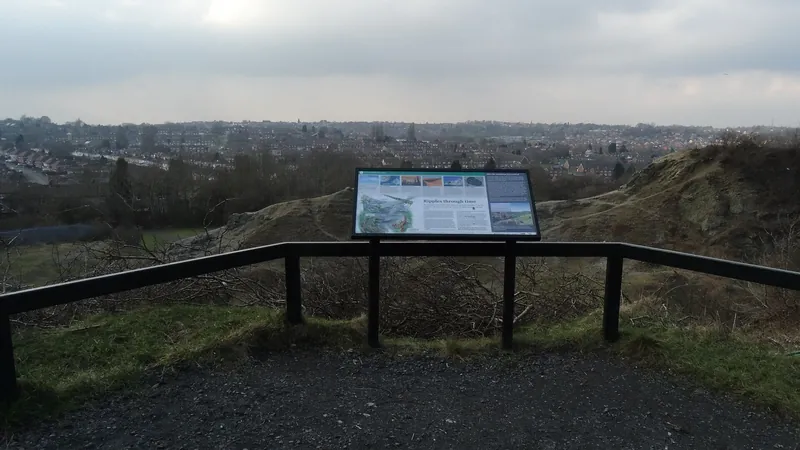
There are four way-marked walks and geoart sculptures. Black Country Geopark
Wardens run ‘Hunt the Dudley Bug’ guided walks. Dudley Council
There is no visitor centre, café or toilets. Black Country Geopark
Our view: very few towns put a fossil on their coat of arms. Dudley’s choice says a lot about how much the limestone, and its trilobites, mattered.
Next: trilobites and people →